
EPS (earnings per share) meaning in simple words
EPS: the company's profit for the year divided by its number of shares: how much profit each share earned.

The story
two people, one chai stall
An analyst emails Sameer one line: "What's your EPS?" He forwards it to Riya with three question marks.
 Riya
Earnings per share. We made ₹9 crore profit. We have 5 crore shares. So each share earned ₹1.80.
 Sameer
Why not just say ₹9 crore?
RiyaBecause nobody owns the whole company. A shareholder owns some shares, so they want to know what one share earned.
SameerAnd they'll compare it with the price?
RiyaAlways. Our share trades at ₹54. ₹54 divided by ₹1.80 is 30. That's our P/E. Buyers are paying 30 years of today's profit for each share.
SameerThirty years! That's a lot of chai.
RiyaIt means they expect profits to grow. If they don't, the price usually comes down to meet the EPS.
The grown-up version
same idea, exact words
Basic earnings per share is the profit attributable to equity shareholders divided by the weighted average number of equity shares outstanding during the period. Diluted EPS also counts shares that could be created, such as from employee stock options or convertible instruments. Both appear on the face of the statement of profit and loss, and are restated for bonus issues and share splits.
Formula
Basic EPS = Profit attributable to equity shareholders ÷ Weighted average number of equity shares
Which rule asks for itInd AS 33, Earnings per Share; Schedule III (Division II), Companies Act, 2013.
Spot it in the wild
a real annual report, a real page
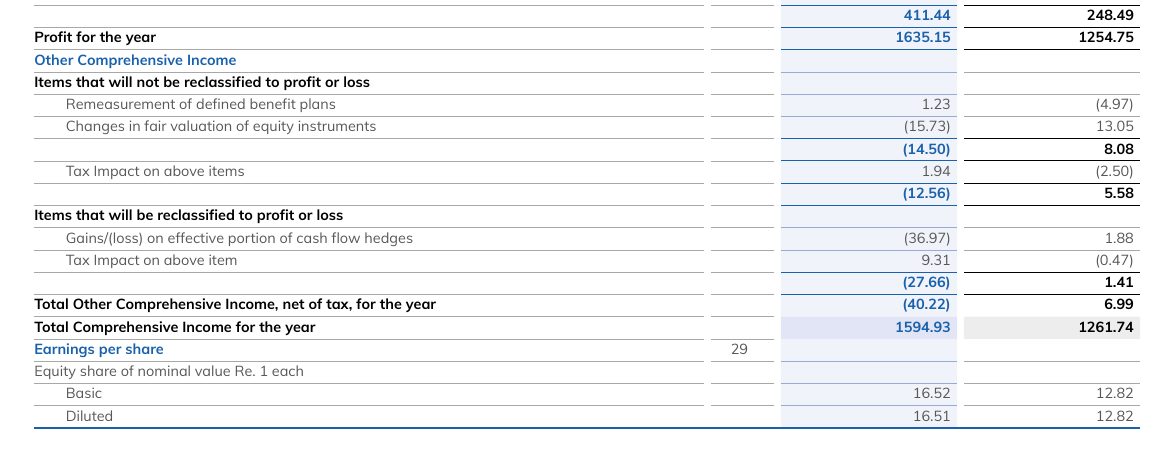
- Basic EPS: ₹16.52 of profit for each share in FY26, up from ₹12.82.
- EPS starts here: the year's profit of ₹1,635 crore, divided by the number of ₹1 shares.
Don't mix it up
the usual confusions
EPS ≠ dividend per share
EPS is the profit each share earned. Dividend per share is the cash actually paid out. Sameer Chai earned ₹1.80 a share and paid ₹0.50.
EPS ≠ diluted EPS
Diluted EPS counts shares that options or convertibles could create, so it's equal to or lower than basic EPS.
EPS ≠ P/E ratio
P/E is the share price divided by EPS: how many years of today's profit buyers are paying for.
Three quick sips
no sign-up, nothing saved
Hindi mein

प्रति शेयर आय (EPS)
EPS यानी प्रति शेयर आय: कंपनी का साल का मुनाफ़ा उसके कुल शेयरों से भाग; हर शेयर ने कितना कमाया।