
Reserves and surplus meaning in simple words, with an example
Reserves and surplus: the part of the shareholders' money that isn't share capital: mainly profits the company has kept, and premiums paid above face value for its shares.

The story
two people, one chai stall
Sameer wants to build a new flagship kiosk. He's found a number he likes.
 Sameer
We have ₹60 crore in reserves. Let's spend it on the flagship.
 Riya
Careful. Reserves aren't a bank account. They're a label for where some of our money came from.
SameerCame from where?
RiyaTwo places. ₹45 crore is the IPO premium: people paid ₹40 a share for a ₹10 share, and the extra ₹30 a share goes here. The other ₹15 crore is profit we've kept instead of paying out.
SameerSo where's the actual money?
RiyaSpread around. Some in kiosks and vans, some in stock, some in the bank. The balance sheet's other side tells you that.
SameerCan we at least pay a bigger dividend from the premium?
RiyaNo. The law lets the premium be used only for a few things, like bonus shares or a buyback. Dividends come from profits.
SameerSo reserves plus share capital is...
Riya₹60 crore plus ₹50 crore: our ₹110 crore net worth.
The grown-up version
same idea, exact words
Reserves and surplus is the part of shareholders' equity other than share capital. It typically includes the securities premium (amounts received above face value, governed by Section 52), retained earnings (accumulated profits less dividends and transfers), general reserve and other statutory or capital reserves. Ind AS companies show it within 'Other equity' under Schedule III, Division II, with the components set out in the notes and the statement of changes in equity. Reserves are a source of funds on the liabilities side, not a store of cash.
Formula
Net worth = Share capital + Reserves and surplus (subject to the Section 2(57) adjustments)
Which rule asks for itSchedule III, Companies Act, 2013 (Division I: 'Reserves and Surplus'; Division II: 'Other Equity'); Section 52 (securities premium); Section 123 (dividends out of profits, and optional transfer to reserves).
Spot it in the wild
a real annual report, a real page
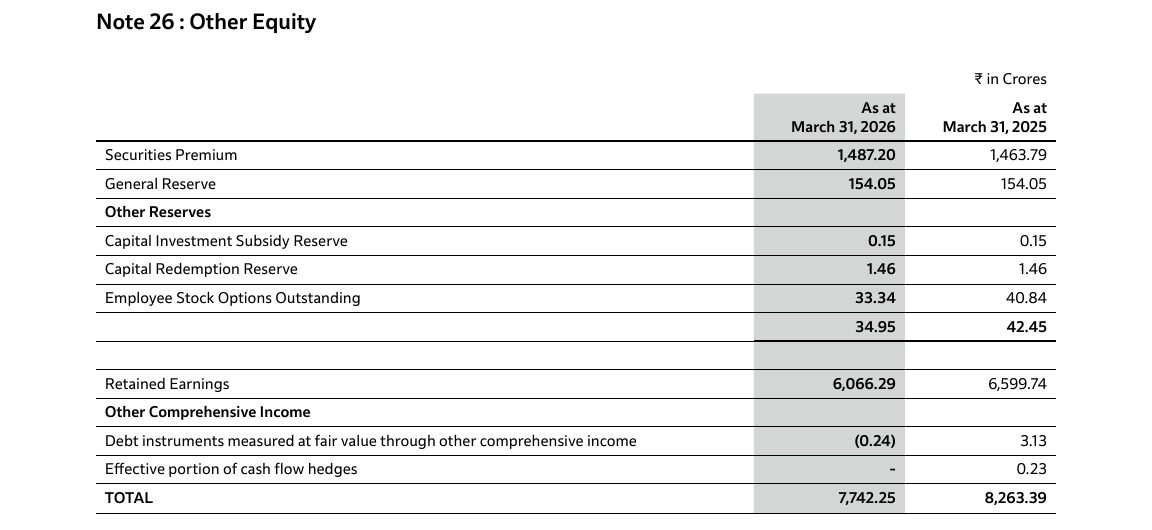
- Securities premium: ₹1,487 crore that shareholders paid above the face value of their shares.
- Retained earnings: ₹6,066 crore of past profits kept in the business, down from ₹6,600 crore.
Don't mix it up
the usual confusions
Reserves and surplus ≠ cash reserves
Reserves are a record of where money came from, not where it is. Sameer Chai's ₹60 crore of reserves is spread across kiosks, stock and cash.
Reserves and surplus ≠ other equity
Ind AS balance sheets call it 'Other equity'. It's the same idea; the notes list the parts, such as securities premium and retained earnings.
Reserves and surplus ≠ provisions
A provision is money set aside for a likely bill, like a warranty claim, and is a liability. A reserve belongs to the shareholders.
Three quick sips
no sign-up, nothing saved
Hindi mein
रिज़र्व और सरप्लस (आरक्षित निधि और अधिशेष)
रिज़र्व और सरप्लस शेयरधारकों के पैसे का वह हिस्सा है जो शेयर कैपिटल नहीं है: ज़्यादातर कंपनी का रोका हुआ मुनाफ़ा और शेयरों की फ़ेस वैल्यू से ऊपर मिला प्रीमियम।
Sources
- Companies Act, 2013, India Code