
Net profit (PAT) meaning in simple words: the bottom line
Net profit: what a company keeps from its revenue after paying every cost, including interest and tax.

The story
two people, one chai stall
The CFO has sent the final numbers. Sameer reads them out loud.
 Sameer
Revenue ₹120 crore, EBITDA ₹18 crore, PAT ₹9 crore. Which one do I tell my mother?
 Riya
PAT. Profit after tax, also called net profit. It's what's left after absolutely everything.
SameerWalk me down.
Riya₹120 crore of sales. Milk, tea, cups, staff and rent take ₹102 crore. Kettles and kiosks wearing out take ₹4 crore. Interest to the bank, ₹2 crore. That leaves ₹12 crore before tax.
SameerAnd the taxman wants a quarter.
Riya₹3 crore. So we keep ₹9 crore. That's the bottom line, because it's literally the bottom line of the profit and loss statement.
SameerIs 9 out of 120 good?
RiyaIt's a 7.5% net margin. For a business selling ₹15 chai, that's decent.
SameerSo the dividend comes out of this ₹9 crore?
RiyaYes. And EPS is this ₹9 crore divided by our 5 crore shares: ₹1.80.
The grown-up version
same idea, exact words
Net profit, or profit after tax (PAT), is the profit for the period shown in the statement of profit and loss: total income less all expenses, including finance costs, depreciation and amortisation, exceptional items and tax expense (current and deferred). It is the figure from which earnings per share is calculated and out of which dividends are mainly paid. It is different from 'net profit' computed under Section 198, which is used for managerial remuneration and CSR.
Formula
Net profit (PAT) = Profit before tax − Tax expense. Net profit margin = Net profit ÷ Revenue.
Which rule asks for itSchedule III (Division II), Companies Act, 2013 (statement of profit and loss); Ind AS 1, Presentation of Financial Statements; Ind AS 12, Income Taxes.
Spot it in the wild
a real annual report, a real page
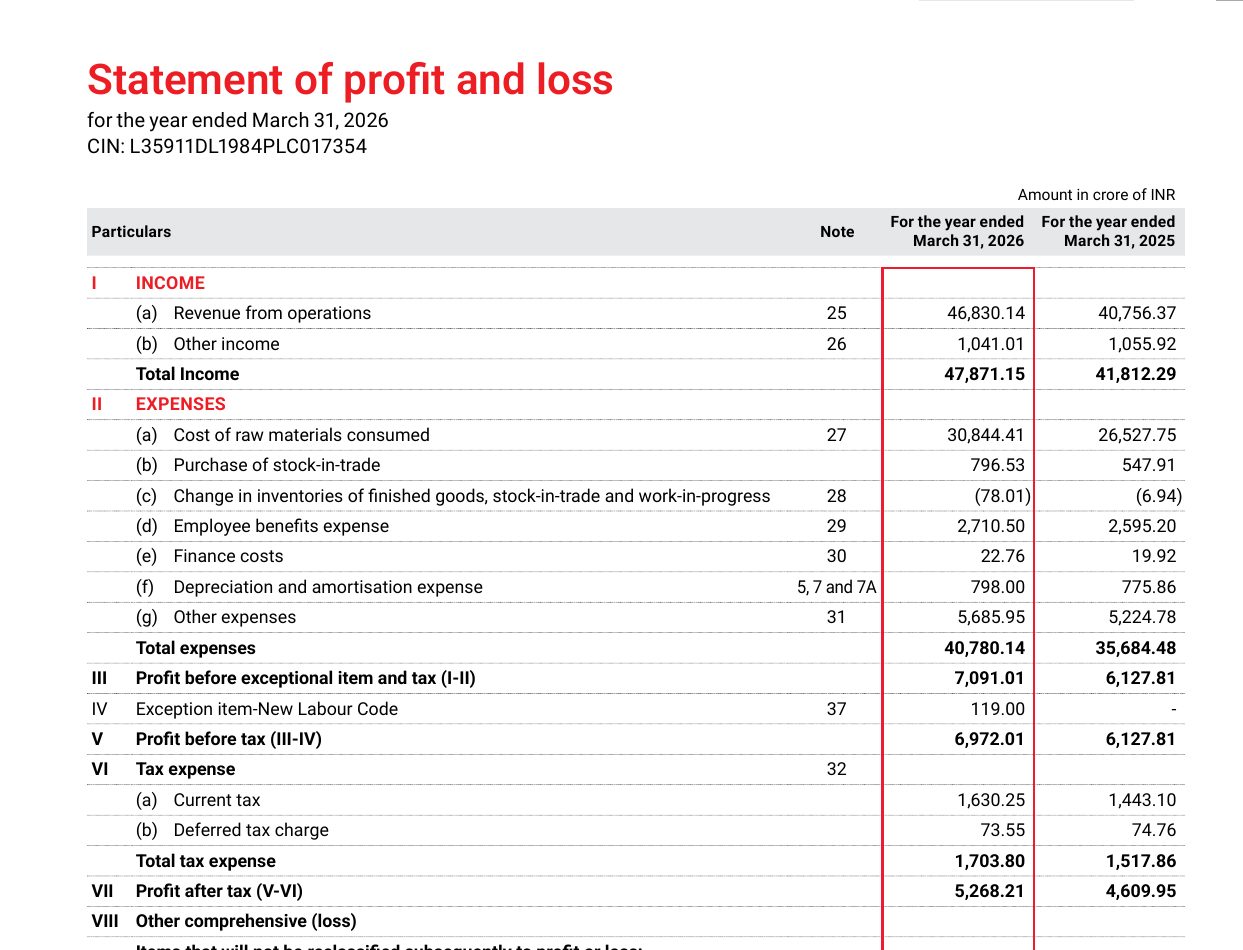
- Profit before tax: ₹6,972 crore, after every cost, including interest and depreciation.
- Net profit (PAT): ₹5,268 crore left after ₹1,704 crore of tax.
Don't mix it up
the usual confusions
Net profit ≠ PAT and PBT
PAT (profit after tax) is the same as net profit. PBT (profit before tax) is one step earlier: Sameer Chai's PBT is ₹12 crore, its PAT ₹9 crore.
Net profit ≠ EBITDA
EBITDA stops before interest, tax and wear and tear, so it is bigger: ₹18 crore against a net profit of ₹9 crore.
Net profit ≠ cash in the bank
Net profit includes sales not yet paid for and costs like depreciation that don't use cash. Profit of ₹9 crore didn't stop Sameer Chai's cash falling by ₹8 crore.
Three quick sips
no sign-up, nothing saved
Hindi mein

शुद्ध लाभ (नेट प्रॉफ़िट / PAT)
नेट प्रॉफ़िट वह कमाई है जो कंपनी के पास हर ख़र्च, ब्याज और टैक्स चुकाने के बाद बचती है।
Sources
- Companies Act, 2013, India Code