Offer for sale (OFS) meaning in simple words: who gets the money
Offer for sale (OFS): when existing shareholders sell their own shares to the public, so the money goes to them, not to the company.
The story
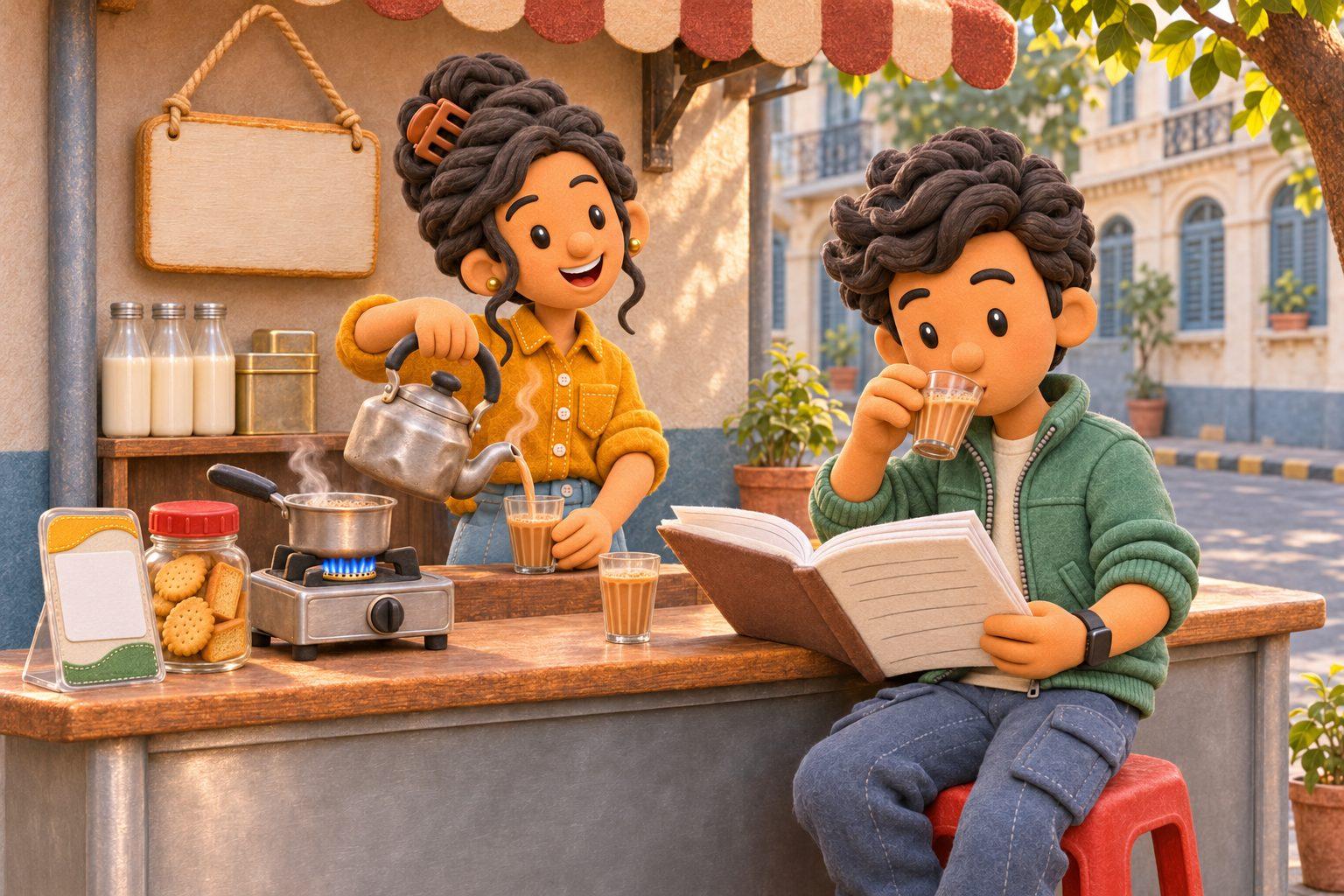
two people, one chai stall
October 2023, IPO week. Sameer is reading the offer document over a cutting chai.
 Sameer
It says the issue is ₹80 crore. But our bank plan shows only ₹60 crore coming in. Did someone lose ₹20 crore?
 Riya
Nobody lost it. That ₹20 crore is the offer for sale. Our early investor is selling his 50 lakh shares at ₹40.
SameerSo the money goes to him?
RiyaAll of it. We don't get a rupee from that part. Only the 1.5 crore new shares bring money to us: ₹60 crore.
SameerWhy is he selling now?
RiyaHe backed a chai stall years ago. An IPO is his chance to cash out, with lots of buyers in one place.
SameerDoes it change our share count?
RiyaNo. His 50 lakh shares just move to new owners. The total is 5 crore shares either way, after the fresh issue.
SameerI'd hate to think he's leaving because of the chai.
RiyaHe's leaving because the chai worked.
The grown-up version
same idea, exact words
In an offer for sale, existing shareholders, such as promoters or early investors, sell shares they already own. No new shares are created, the company's share capital doesn't change, and the proceeds go to the selling shareholders, who usually bear their share of the issue costs. In an IPO, only fully paid-up shares held for at least one year before the draft offer document is filed can be offered for sale. Promoters and large shareholders of companies that are already listed can also sell through a separate OFS window run on the stock exchanges.
Formula
IPO issue size = Fresh issue + Offer for sale
Which rule asks for itRegulation 8, SEBI (ICDR) Regulations, 2018 (offer for sale in an IPO); SEBI's framework for offer for sale through the stock exchange mechanism (listed companies).
Spot it in the wild
a real annual report, a real page

- HDB Financial's IPO had two parts: ₹2,500 crore of new shares and a ₹10,000 crore offer for sale by HDFC Bank.
- In the OFS, HDFC Bank sold about 13.5 crore of its shares at ₹740. That money went to the bank, not to HDB.
Don't mix it up
the usual confusions
Offer for sale (OFS) ≠ fresh issue
A fresh issue creates new shares and the money goes to the company. An OFS sells existing shares and the money goes to the sellers.
Offer for sale (OFS) ≠ IPO
An IPO can be all fresh issue, all OFS, or a mix. The OFS is just the part where existing owners cash out.
Offer for sale (OFS) ≠ buyback
In a buyback the company buys shares from shareholders. In an OFS, shareholders sell to new investors, and the company's cash doesn't change.
Three quick sips
no sign-up, nothing saved
Hindi mein
ऑफ़र फ़ॉर सेल (OFS)
ऑफ़र फ़ॉर सेल में पुराने शेयरधारक अपने ही शेयर जनता को बेचते हैं, इसलिए पैसा उन्हें मिलता है, कंपनी को नहीं।