Dividend payout ratio meaning in simple words, with example
Payout ratio: the part of a year's profit that a company pays out to shareholders as dividends, shown as a percentage; the rest is kept in the business.
The story
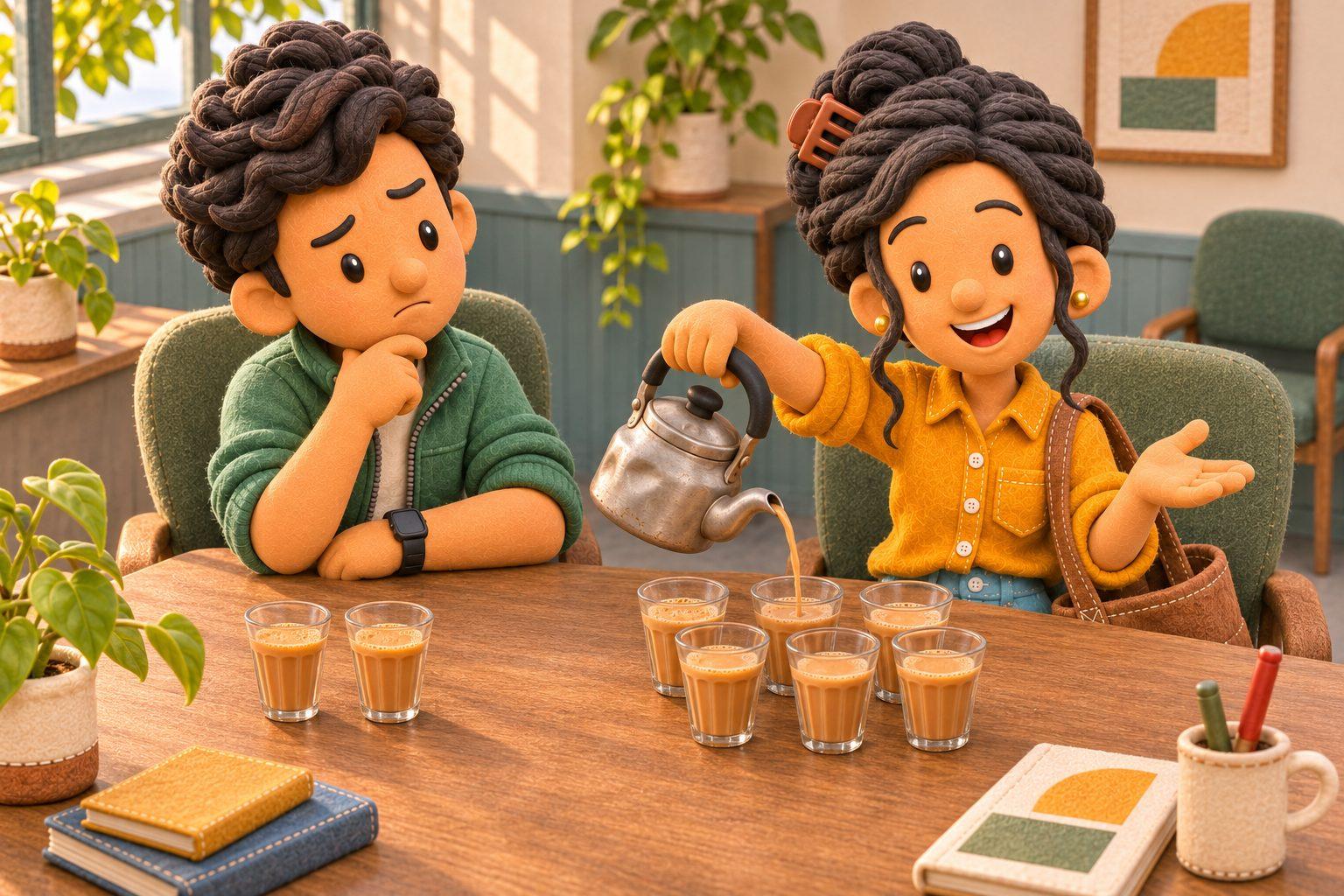
two people, one chai stall
Board meeting, May. The dividend is on the table again, and Sameer is torn.
 Sameer
Fifty paise a share. Is that stingy or generous?
 Riya
Look at it against profit. Fifty paise on 5 crore shares is ₹2.5 crore. Profit is ₹9 crore. So we pay out about 28%.
SameerThat's the payout ratio?
RiyaYes. Per share works too: fifty paise over ₹1.80 of earnings, still about 28%.
SameerAnd the other 72%?
Riya₹6.5 crore stays in the business. That pays for kiosks, vans, maybe a new city.
SameerSome big companies pay out more than half their profit.
RiyaUsually ones that have stopped growing fast. They have more cash than ideas. We still have more ideas than cash.
SameerDo we need a written policy on this?
RiyaSEBI makes the top 1,000 listed companies publish one. We're not there yet, but writing one now would tell shareholders what to expect.
SameerThen let's write it before they start asking.
The grown-up version
same idea, exact words
The dividend payout ratio is total dividends for a year divided by profit after tax for that year, or equivalently dividend per share divided by earnings per share. Companies define it slightly differently (proposed or paid dividends, standalone or consolidated profit, before or after exceptional items), so the small print matters. Its opposite, the share of profit kept, is the retention ratio.
Formula
Payout ratio = Dividends for the year ÷ Profit after tax × 100 (or Dividend per share ÷ EPS)
Which rule asks for itNo law sets a payout ratio. Under Section 123, Companies Act, 2013, dividends come out of the current or earlier years' profits. Regulation 43A, SEBI (LODR) Regulations, 2015 requires the top 1,000 listed companies by market capitalisation to publish a dividend distribution policy setting out the financial parameters they consider; others may do so voluntarily.
Spot it in the wild
a real annual report, a real page
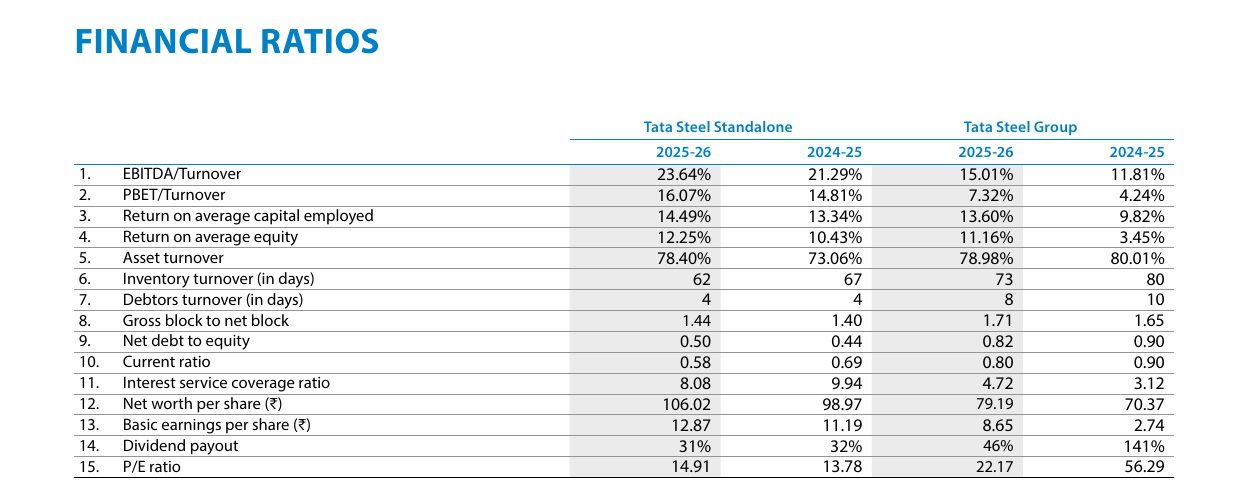
- Payout ratio: 31% of FY26 standalone profit goes out as dividend, against 32% a year before.
- For the whole group, the payout was 46%.
Don't mix it up
the usual confusions
Payout ratio ≠ dividend yield
Dividend yield compares the dividend with the share price: about 0.93% for Sameer Chai. Payout ratio compares it with profit: about 28%.
Payout ratio ≠ retained earnings
Retained earnings are the profit kept, not paid out. Payout ratio + retention ratio = 100%.
Payout ratio ≠ dividend percentage
A '5% dividend' is 5% of face value. A 28% payout ratio is 28% of profit. Different bases, different numbers.
Three quick sips
no sign-up, nothing saved
Hindi mein
डिविडेंड पेआउट रेशियो
पेआउट रेशियो बताता है कि साल के मुनाफ़े का कितना प्रतिशत कंपनी ने डिविडेंड के रूप में शेयरधारकों को दिया; बाक़ी कारोबार में रखा जाता है।