
Shareholding pattern meaning in simple words: who owns a company
Shareholding pattern: the table a listed company files every quarter showing who owns its shares: promoters, mutual funds, foreign investors, individuals and others.
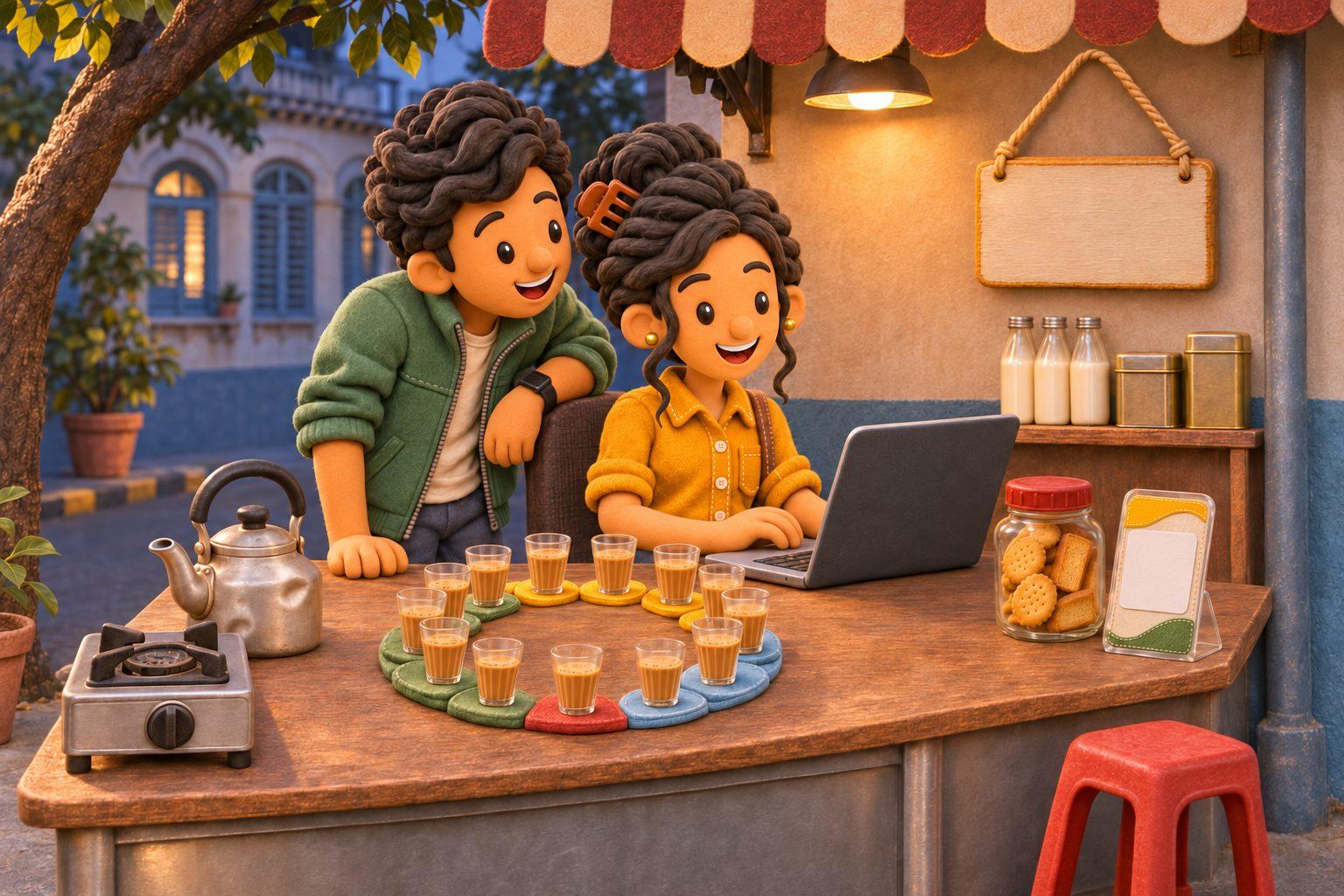
The story
two people, one chai stall
Quarter end. Riya is filling in a long table for the stock exchanges. Sameer reads over her shoulder.
 Sameer
Another form?
 Riya
The shareholding pattern. Every quarter we tell the exchanges who owns the company, within 21 days.
SameerWho does?
RiyaYou hold 60%, as the promoter. Ordinary individuals hold 25%. Mutual funds 8%, foreign investors 4%, and others 3%.
SameerMutual funds own a piece of us?
Riya8% of the company. When that number grows quarter after quarter, people notice. Analysts watch these tables for exactly that.
SameerWhat else do they watch?
RiyaYour pledge. You've pledged 30 lakh of your shares for a personal loan. That shows up here too.
SameerEveryone can see that?
RiyaYes. Pledged promoter shares are a classic thing investors check, in case a lender ever sells them.
SameerSo this table is our family photo.
RiyaTaken four times a year, and everyone gets a copy.
The grown-up version
same idea, exact words
The shareholding pattern is a statement, in a format set by SEBI, that classifies a listed company's shareholders into promoter and promoter group, public (institutions such as mutual funds, insurers and foreign portfolio investors, and non-institutions such as individuals and companies) and non-promoter non-public holders. It also shows details such as pledged and locked-in shares. Exchanges publish it on their websites, and many annual reports summarise it.
Which rule asks for itRegulation 31, SEBI (LODR) Regulations, 2015: filed with the stock exchanges one day before listing, within 21 days of the end of each quarter (half-yearly for SME-listed companies), and within 10 days of a capital change of more than 2%. Promoter and promoter group holdings must be shown separately and held fully in demat form.
Spot it in the wild
a real annual report, a real page
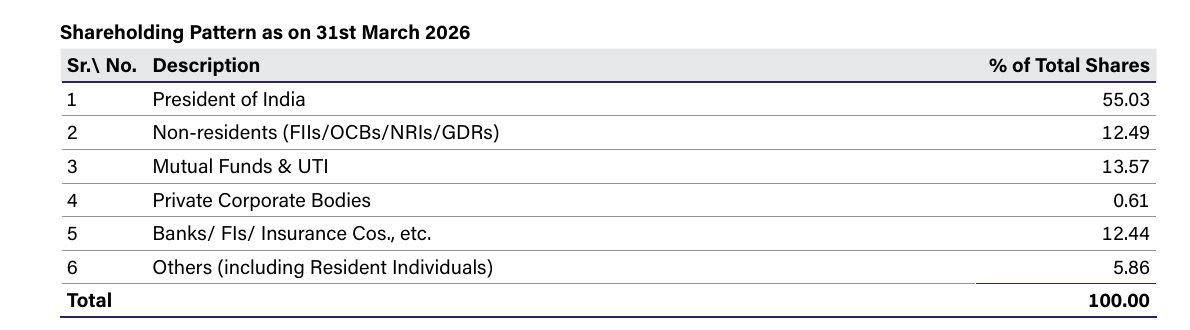
- The biggest owner: the President of India, meaning the Government, with 55.03%.
- Mutual funds own 13.57%. Foreign investors and banks or insurers own about 12.5% each.
Don't mix it up
the usual confusions
Shareholding pattern ≠ free float
Free float is one number: the public's share, 40% for Sameer Chai. The shareholding pattern breaks the whole 100% into groups.
Shareholding pattern ≠ top shareholders list
A top-ten list names individual holders. The shareholding pattern groups them by type: promoter, funds, foreign investors, individuals.
Shareholding pattern ≠ register of members
The register lists every single shareholder by name and is kept by the company. The shareholding pattern is a public summary filed with the exchanges.
Three quick sips
no sign-up, nothing saved
Hindi mein
शेयरहोल्डिंग पैटर्न
शेयरहोल्डिंग पैटर्न वह तिमाही तालिका है जो बताती है कि लिस्टेड कंपनी के शेयर किसके पास हैं: प्रमोटर, म्यूचुअल फ़ंड, विदेशी निवेशक, आम लोग और बाक़ी।