
Stock split meaning in simple words: same pie, smaller slices
Stock split: a company cuts each share into smaller shares with a lower face value, so you hold more shares but own exactly the same slice of the company.
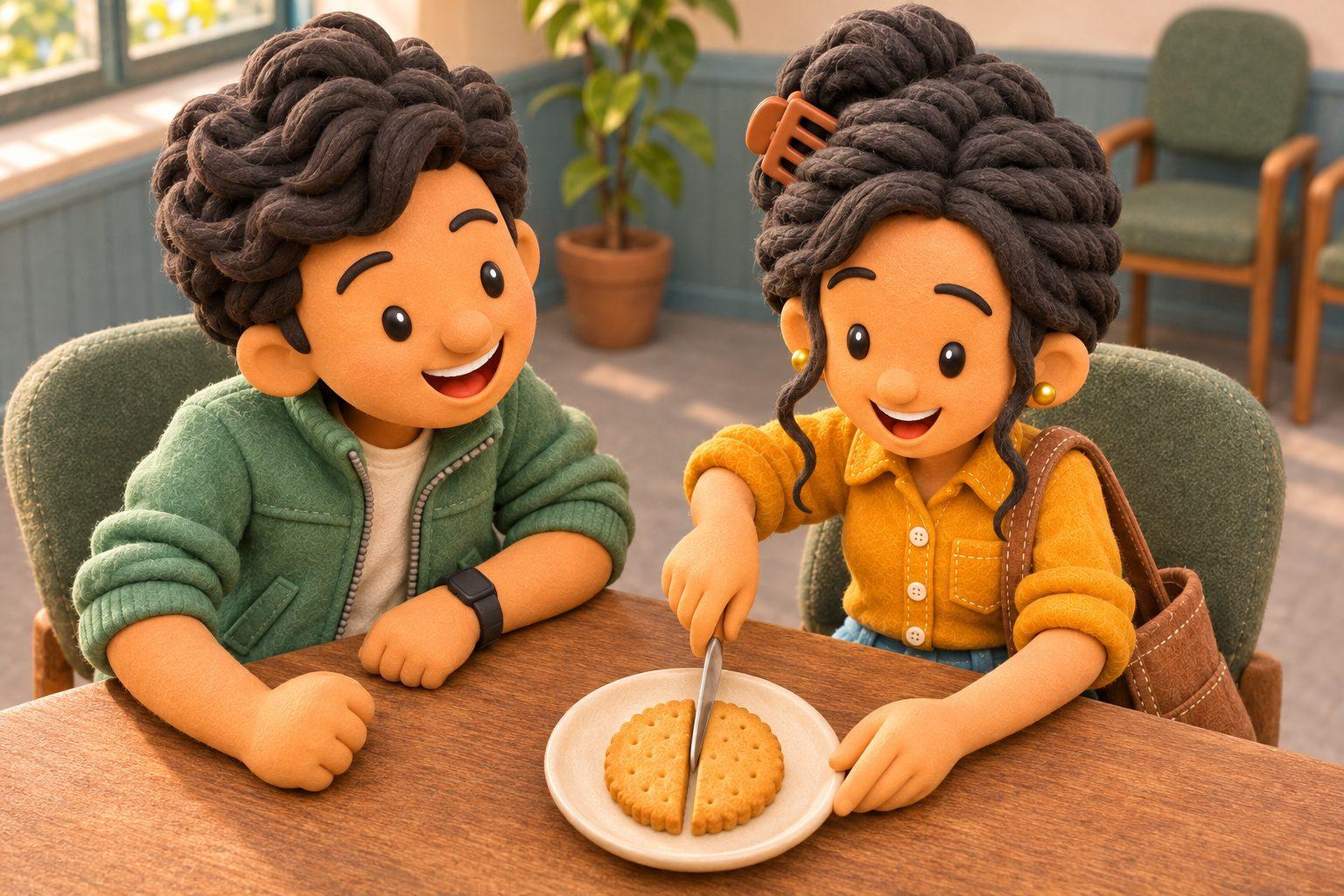
The story
two people, one chai stall
A planning meeting for FY27. Nothing is decided yet.
 Sameer
Big companies keep splitting their shares. Should we?
 Riya
A stock split. Each ₹10 share becomes two ₹5 shares. Our 5 crore shares become 10 crore.
SameerSo we're twice as big?
RiyaNo. Same pie, cut into smaller slices. The price should settle around ₹27, half of ₹54. The market cap stays about ₹270 crore.
SameerWhat happens to your mum's shares?
RiyaHer 200 shares become 400, worth the same as before.
SameerThen why bother?
RiyaA lower price per share can make it easier to buy in small amounts, so more people might trade it. That's the hope, anyway.
SameerDoes any money move?
RiyaNot a rupee. Share capital stays ₹50 crore: 10 crore shares × ₹5. We need the board, a shareholder vote and a record date, that's all.
SameerSo it's a haircut for the shares.
RiyaExactly. Same head, shorter strands.
The grown-up version
same idea, exact words
A stock split, or sub-division, divides each existing share into several shares of a lower face value. Share capital, reserves and net worth don't change, and every shareholder keeps the same percentage. A company can do it only if its articles allow, by altering its memorandum through a resolution in a general meeting, and it must notify the Registrar of Companies within 30 days. A listed company fixes a record date for the split, and earnings per share for earlier periods are restated for the new share count.
Formula
New shares = Old shares × Old face value ÷ New face value. Adjusted price ≈ Old price × Old shares ÷ New shares.
Which rule asks for itSections 61(1)(d) and 64, Companies Act, 2013; Regulation 42, SEBI (LODR) Regulations, 2015; Ind AS 33.
Spot it in the wild
a real annual report, a real page
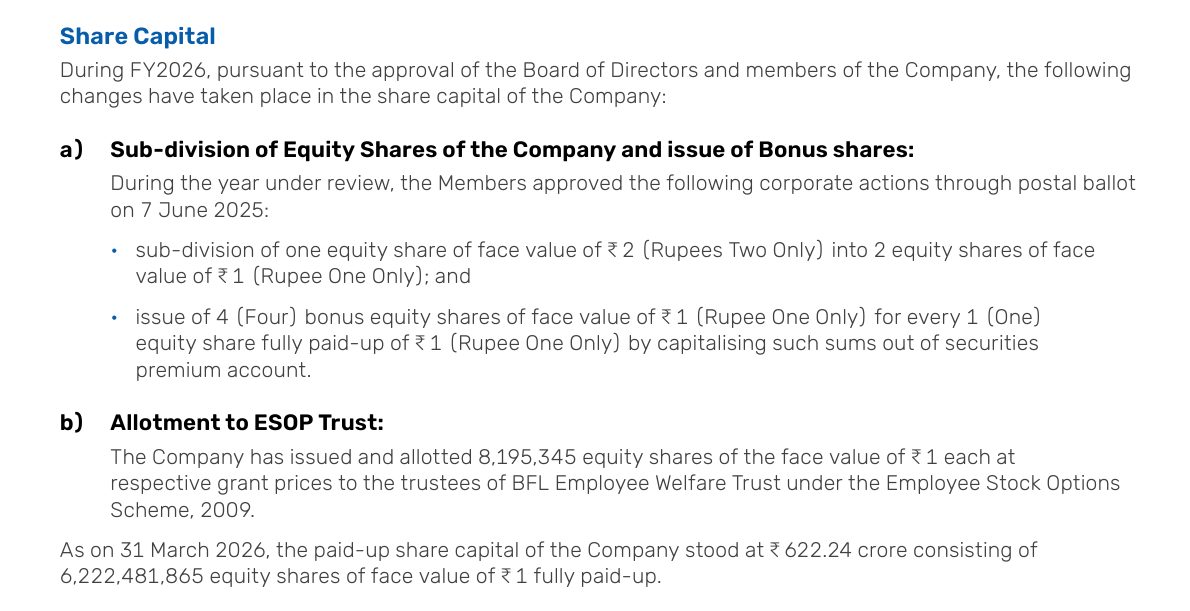
- The split: every ₹2 share became two ₹1 shares.
- After the split (and a bonus), about 622 crore shares of ₹1 each. Share capital is ₹622.24 crore.
Don't mix it up
the usual confusions
Stock split ≠ bonus shares
A bonus keeps the face value and moves money from reserves into share capital. A split lowers the face value and moves no money at all.
Stock split ≠ reverse split
A reverse split, or consolidation, does the opposite: several small shares are joined into one bigger share.
Stock split ≠ share price
The split cuts the face value (₹10 to ₹5) on paper. The market price falls too, but only because the same company is now cut into more pieces.
Three quick sips
no sign-up, nothing saved
Hindi mein
स्टॉक स्प्लिट (शेयर विभाजन)
स्टॉक स्प्लिट में कंपनी हर शेयर को कम फ़ेस वैल्यू वाले छोटे शेयरों में बांट देती है, आपके शेयर बढ़ जाते हैं पर कंपनी में आपका हिस्सा उतना ही रहता है।